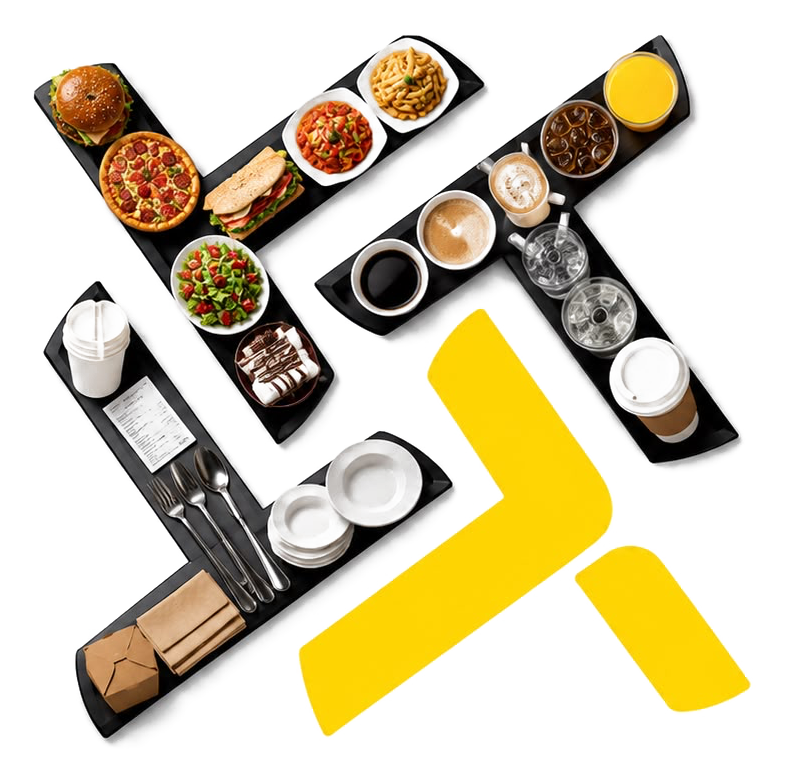
A fragmented operation
versus a unified one
This is not a comparison between brands, but between two ways of working: several tools, separate data, duplicated entry and conflicting reports — or one source shared by the order, the branch, the employee, the money and the report.
Several systems that never talk to each other
- A separate system or tool for each part of the operation
- Separate data that cannot be read together
- The same order entered more than once
- Conflicting reports that are hard to defend
One source everyone shares
- The same order
- The same branch
- The same employee
- The same financial movement
- The same report
Pick an axis — compare both states
Every axis is tied to what the product actually does. No competitor names and no claims that cannot be shown.
Orders
The order is typed on one screen, called out to the kitchen, then entered again at payment — three copies of one thing.
The order is created once and carries its own state: intake, prep, completion, close.
Modules left hanging — or wired into one core
One picture has the same modules each holding its own data. The other has those modules sharing one source.
Each module keeps its own copy, so unification happens by hand at end of day or month.
Click any connected module to load its axis in the comparison above — the same selection, the same panel.
Not every business needs everything
If your business is direct selling only — no kitchen, no stock, no team — a simple sales tool may be enough. The value appears when there is more than one employee, more than one order channel, stock that must match sales, or an owner who needs a figure they can defend.
Ready to level up your restaurant or café?
Start with TRED OrderHub today — easy onboarding, Saudi support, zero sales commission.